How shared meals are tackling food insecurity and loneliness across Melbourne.
Food insecurity and social isolation are quietly affecting thousands of Melbourne households. Traditional community spaces are disappearing, and the rising cost of living is leaving locals struggling to find a sense of belonging and connection.
According to the Australian Institute of Health and Welfare, 3.4 million Australian households are experiencing food insecurity, including 2 million experiencing “severe” food insecurity. In the past year, 3.7 million Australian households (36%) experienced moderate to severe food insecurity.
Food insecurity is increasingly affecting working households with stable housing, challenging perceptions of who experiences food stress in the current economic climate.
The demand for food relief in Victoria is higher than ever, with OzHarvest identifying the majority of people in need as employed and housed individuals.
But across Melbourne, from religious events in the western suburbs to food stalls in the inner city, communities are discovering how cooking together might alleviate not only hunger, but also isolation.
The Feast of Our Lady of the Rosary is an annual celebration of Maltese culture, religion, and food in St Albans in Melbourne’s west. Made possible by a group of women who spend their time sourcing and preparing ingredients, the event reflects community care and effort.
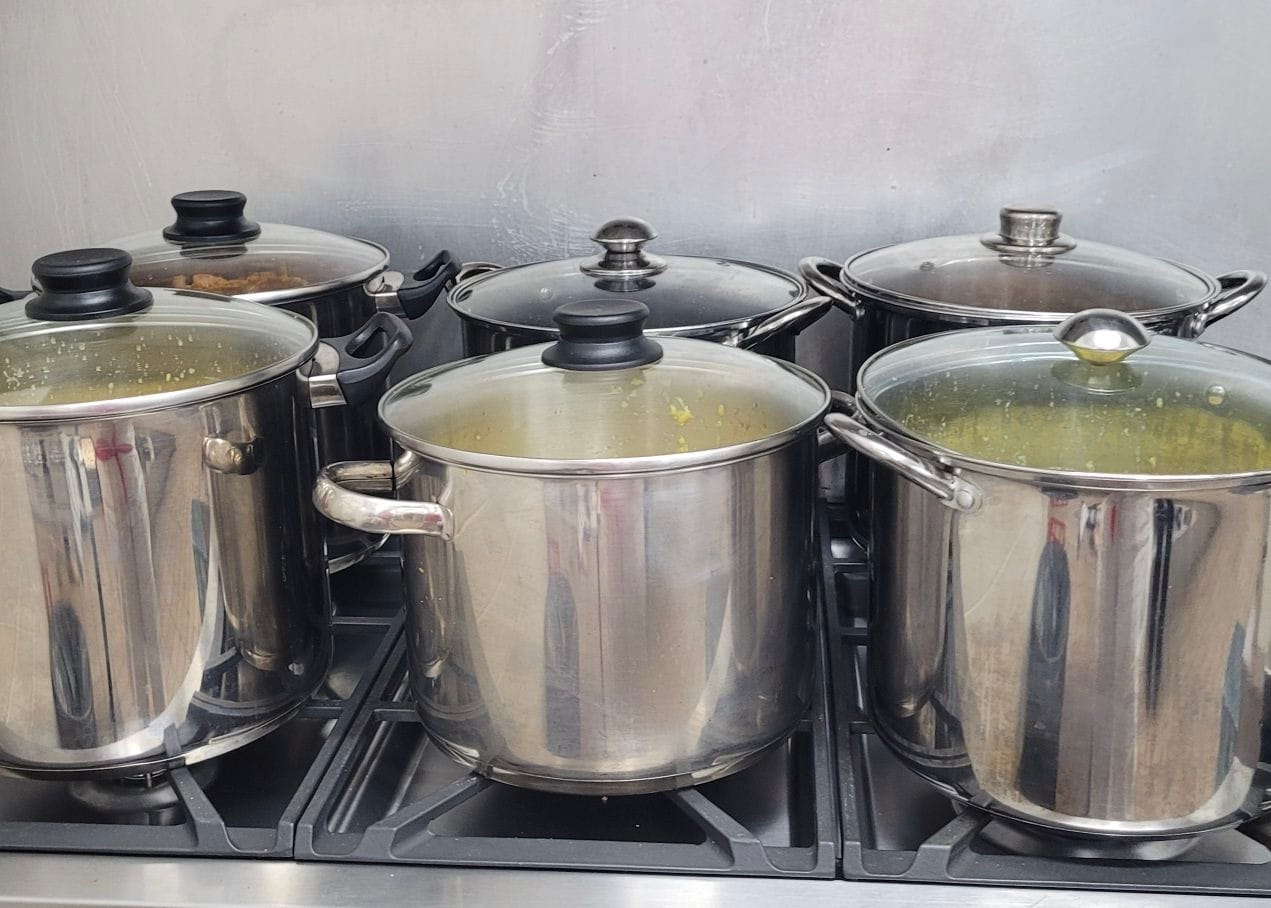
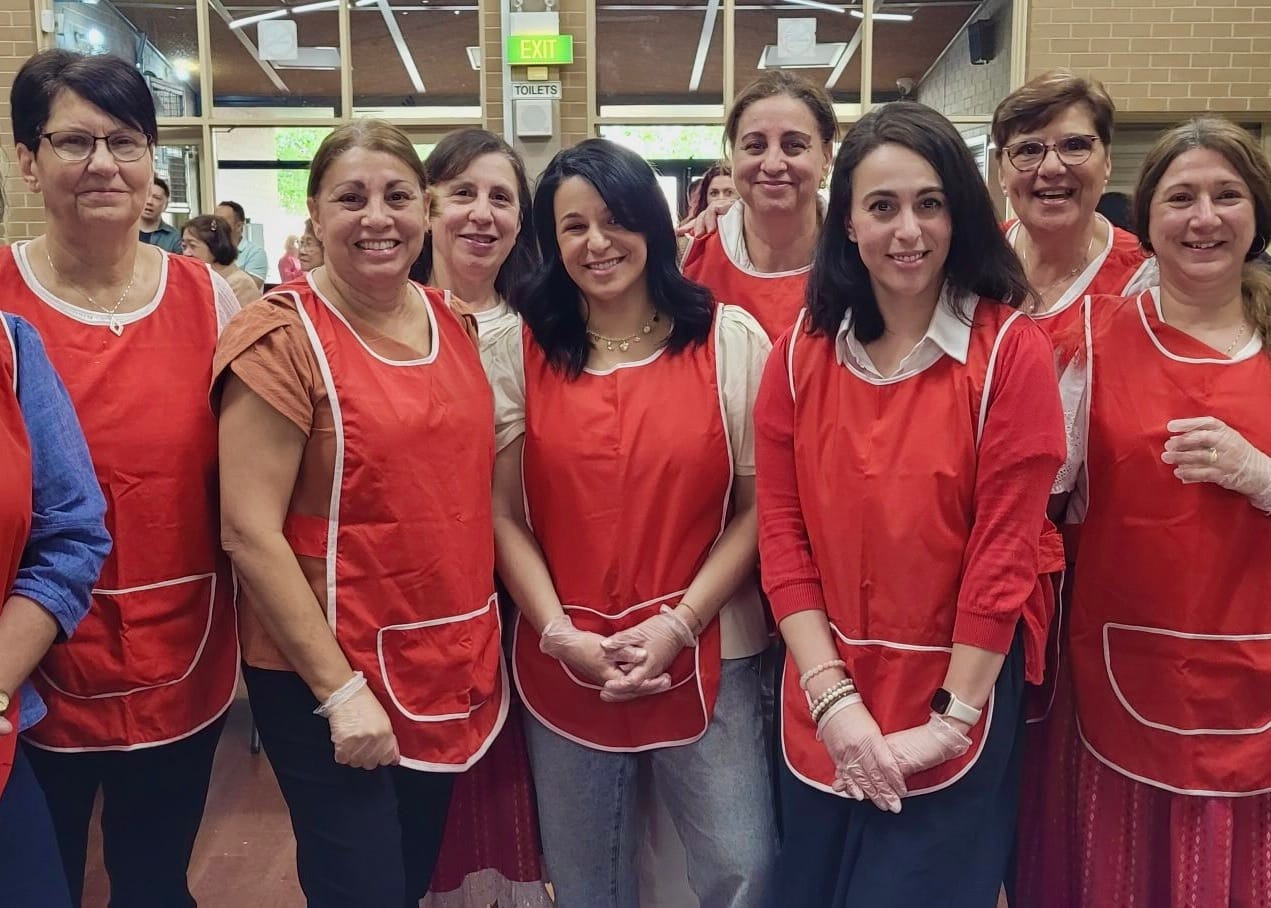
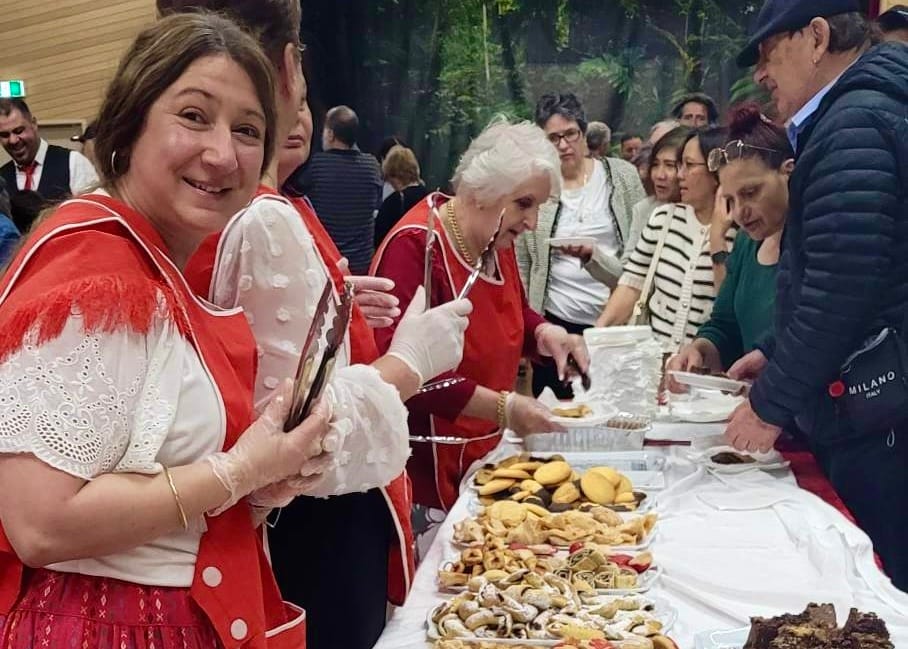
The Feast of Our Lady of the Rosary.
Organiser Ann Newland, for example, has spent six months preparing for the feast, which draws hundreds to celebrate the day and the Maltese community. More than just a celebration of religion and culture, the feast is a powerful demonstration of how food and shared community can bond people together.
For Newland, the feast serves a deeper purpose in the community. “For some people, you know, maybe they don't go out much and this is an opportunity to socialise,” she says.
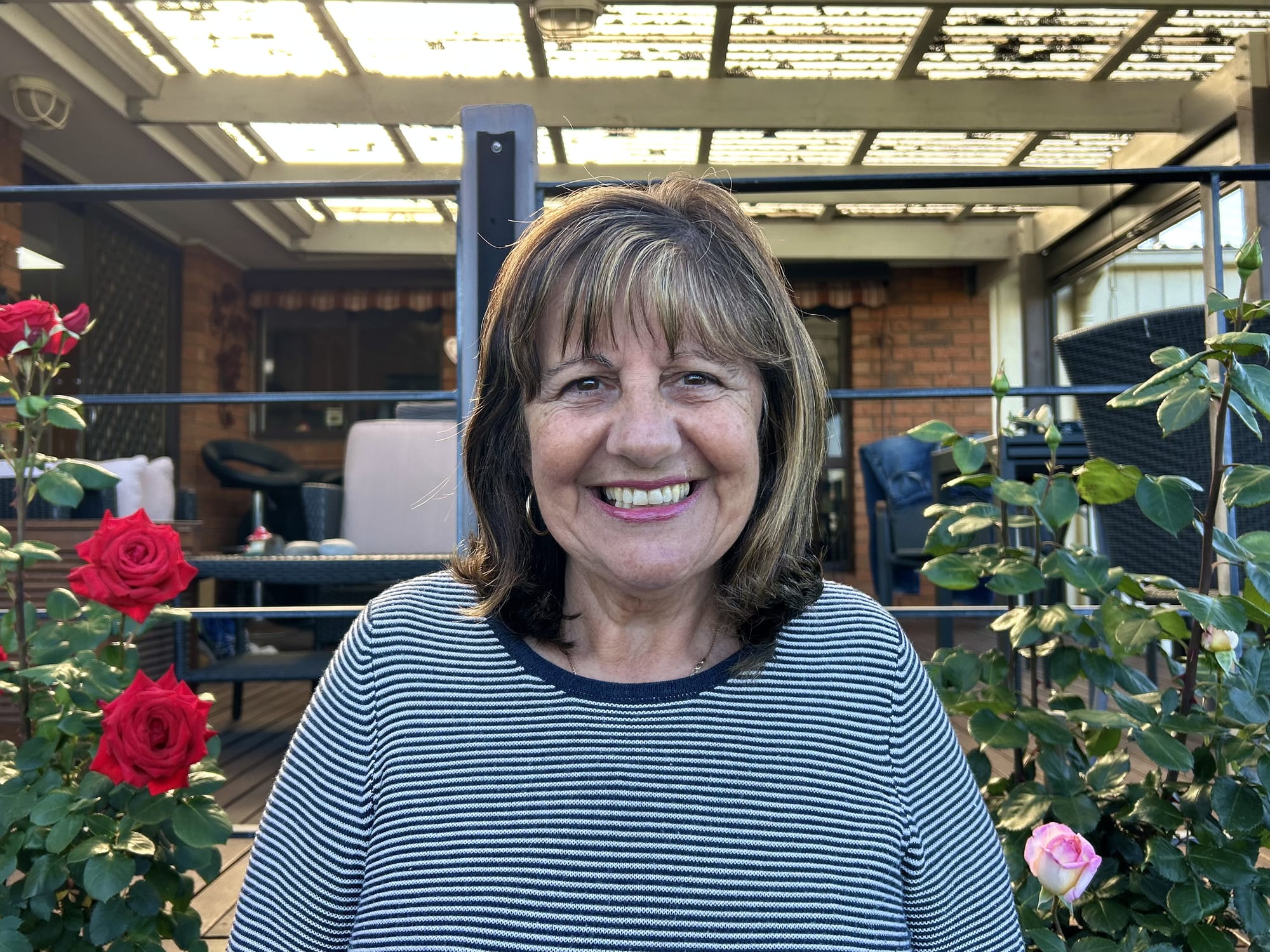
“It's also about empowering people and making them feel like they belong, and also about using their gifts.”
Ann Newland
The Feast continues a tradition that began when Maltese immigrants first settled in St Albans in the post-war era, transforming the western suburb into one of Melbourne's most significant Maltese communities.
But over the years, the feast has evolved into more than just a cultural and religious celebration.
“It's important to celebrate our faith and Our Lady, but it's important to come together as a community, but for the wider community as well,” Newland says. “It's not just for the Maltese, it's for the whole community, and others are invited and everybody is welcome.”
For Newland, offering free food without barriers is a key element of the feast. “The church is the main thing with the feast. But then the doors are open to everyone there,” she explains. “To be able to do that and tell everyone to come in and have free food and not have to pay, have a coffee, have something to eat. How good is it to be able to do that?”
Spaces like the Maltese feast, where people can gather without financial barriers or social pressure, are becoming increasingly vital.
According to the Australian Institute of Health and Welfare’s 2023 report , more than one-third of Australian adults reported experiencing loneliness at least some of the time. Overall, the average frequency of social contact has declined across all age groups over the past 20 years.
While this decline may be gradual, the implications are significant, with nearly 6 weekly social interactions reduced to around 4 for young people, and similar drops across all demographics. Events like the feast are so crucial for the community as they address the need for judgment-free gatherings that the data shows Australians have steadily lost.
Public health nutrition researcher, Dr Suzanne Kleve, has spent years focusing on the existence and lived experiences of food insecurity and exploring solutions to address and pathways out of food insecurity.
Kleve explains it as a multifaceted issue. It spans from the anxiety about making ends meet to compromising on quality and quantity to going without food entirely. Food insecurity impacts “not only people's physical health but also their social well-being as well as mental well-being,” says Kleve.
The Maltese feast addresses real people and their needs. Kleve explains that dignity is central to addressing food insecurity and that creating models that allow “people to engage and source food in a dignified way” is the solution.
Those volunteering their time and efforts don’t discriminate and welcome all to enjoy. It’s a space where people can access food with no stigmas, no means testing, and it doesn’t feel like a social service. It is simply a space for people to make connections and enjoy accessible food.
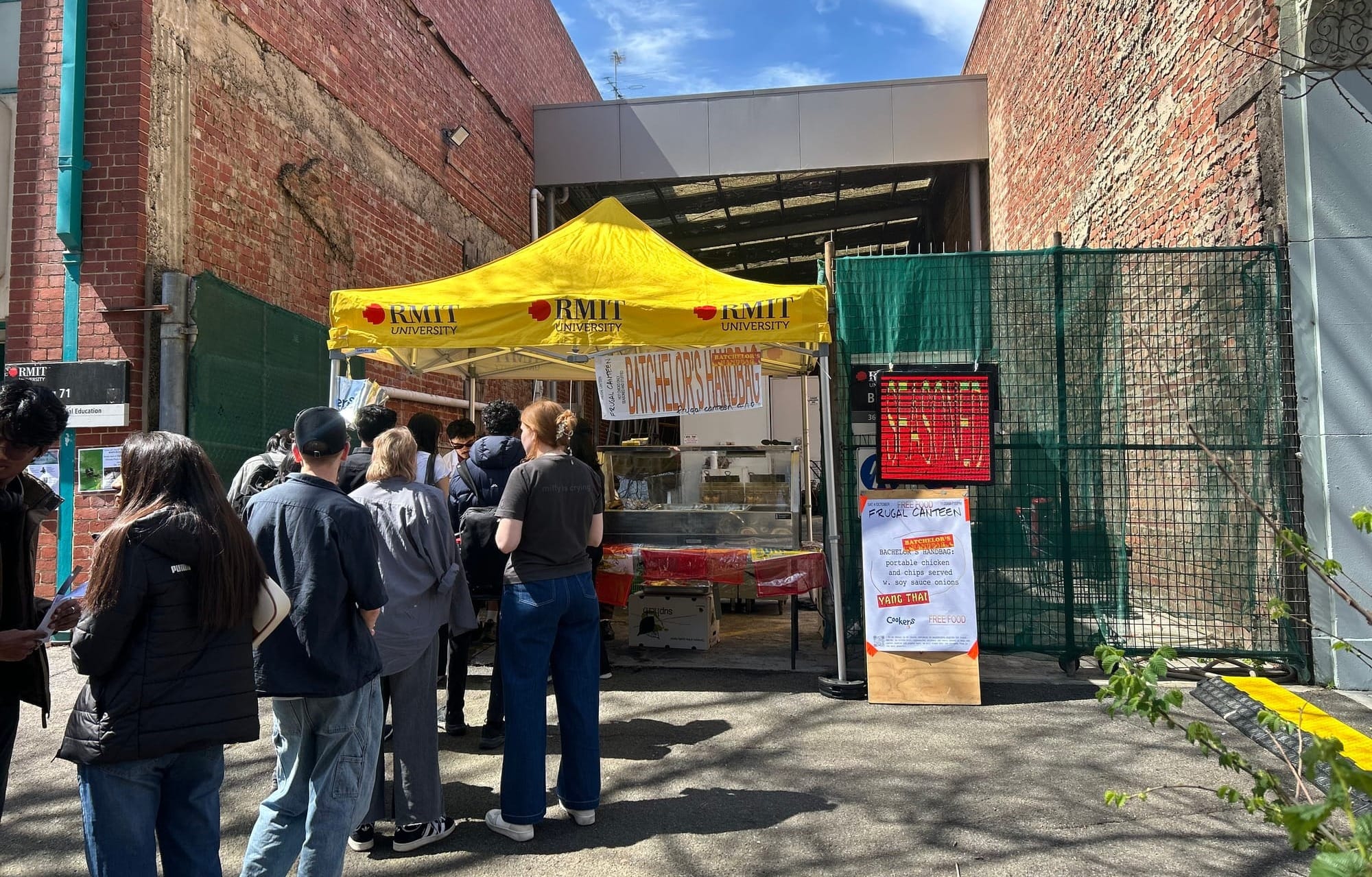
In a similar initiative at Melbourne’s City North Shared Futures Festival, Carlton’s bustling Cardigan Street is closed off to cars and opened to people, transforming into a festival space alive with art and food. Entry is free for all, and the ‘Frugal Canteen’ set up provides access to complimentary culturally diverse food.
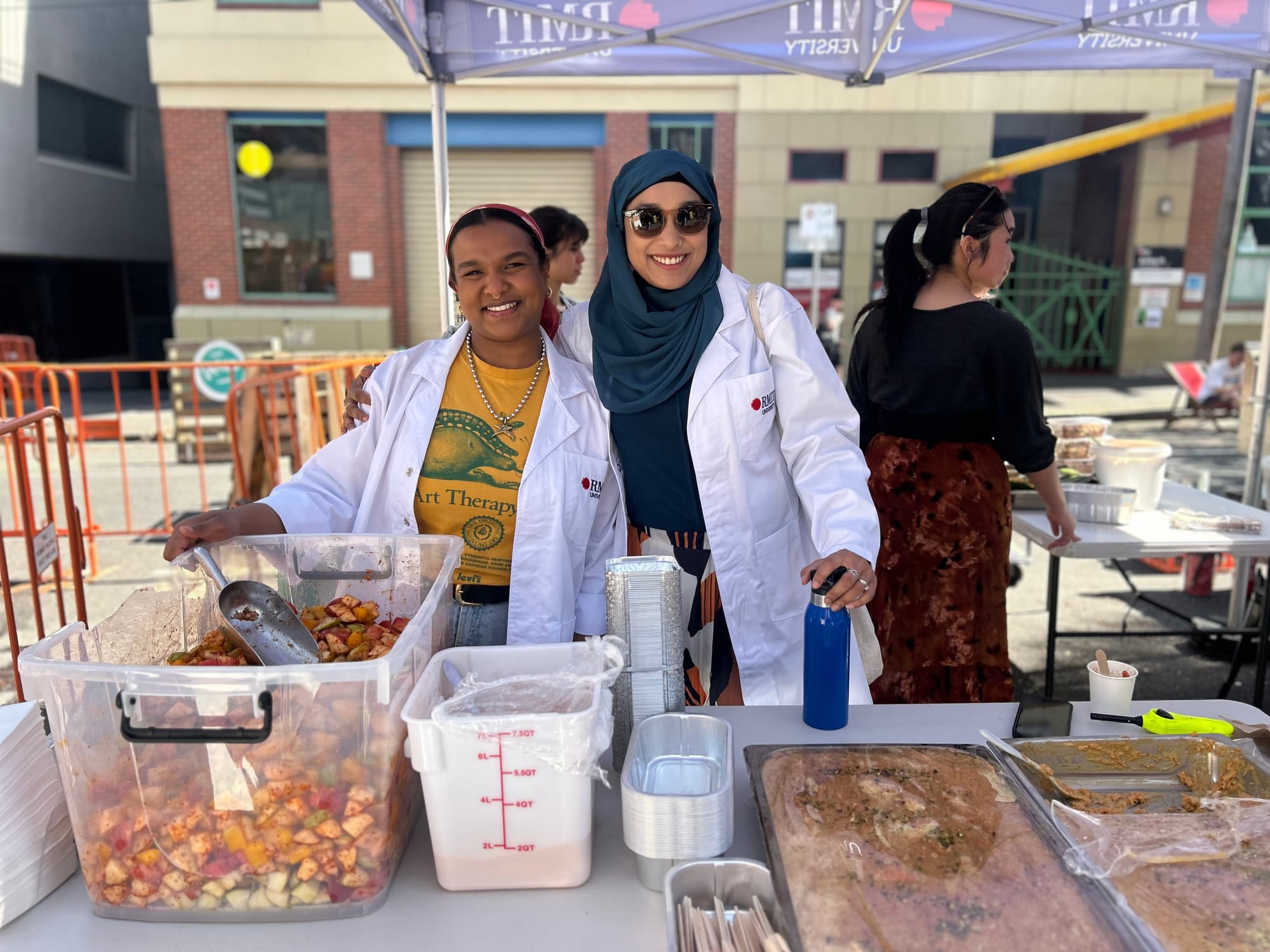
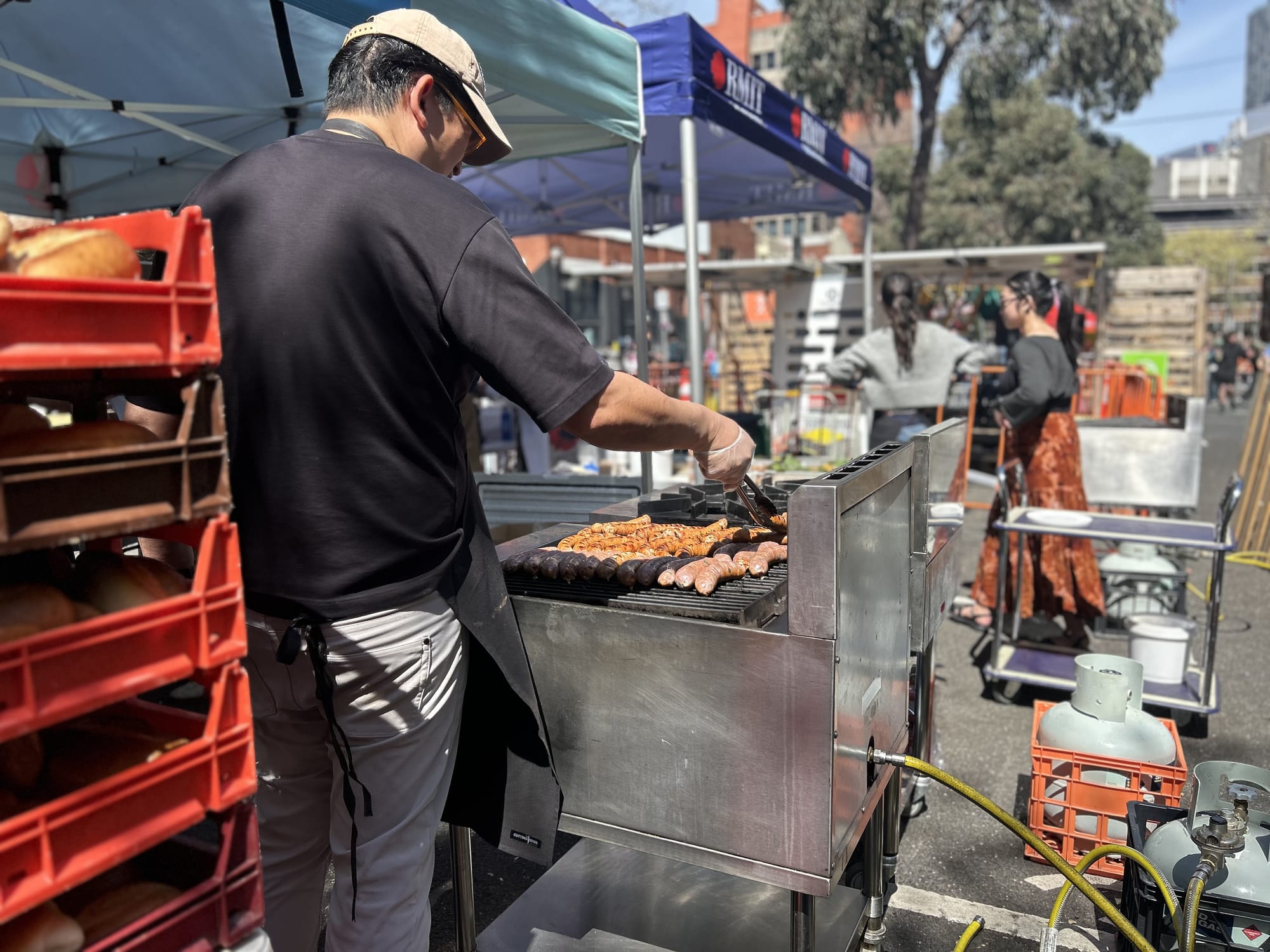
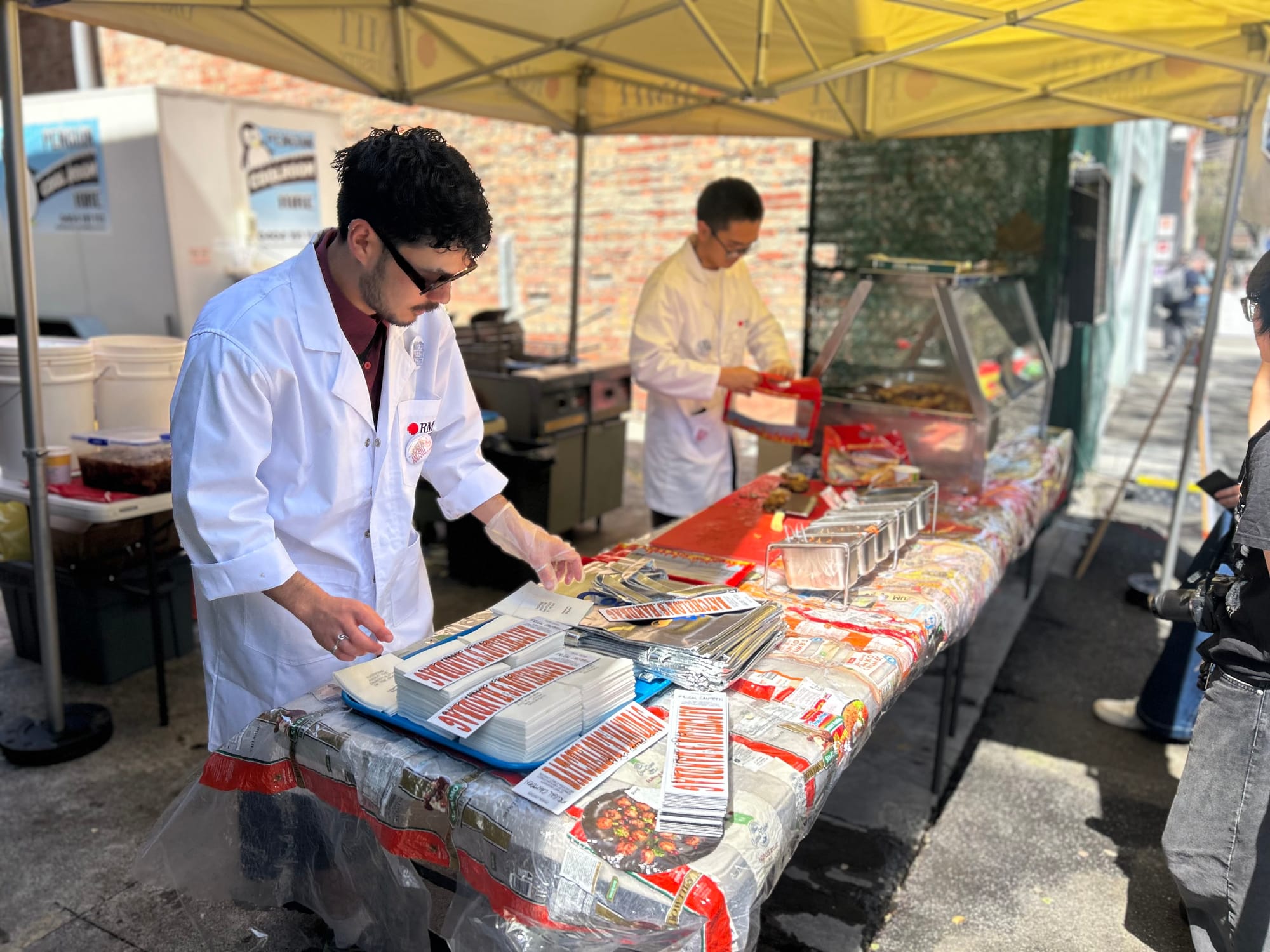
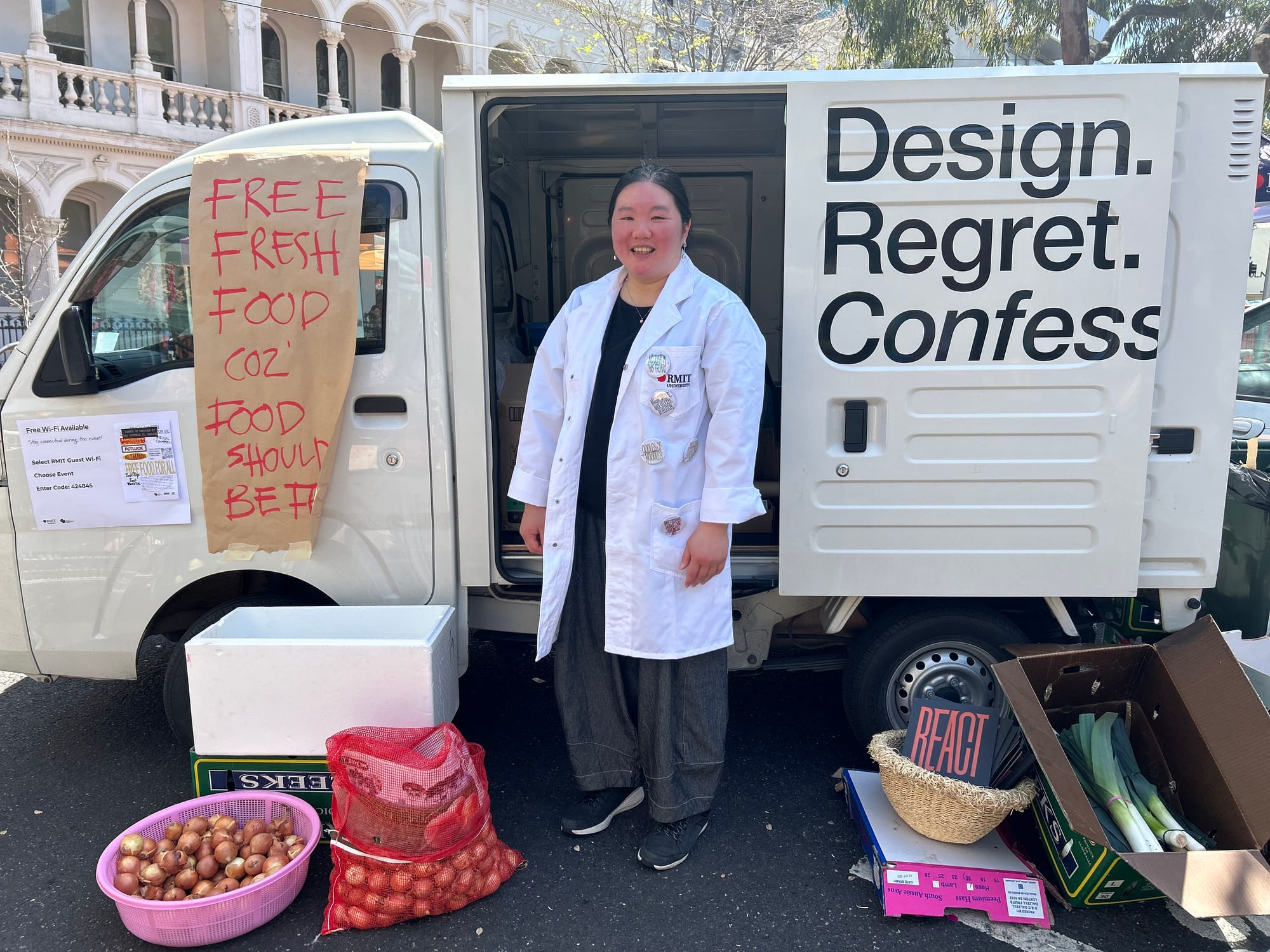
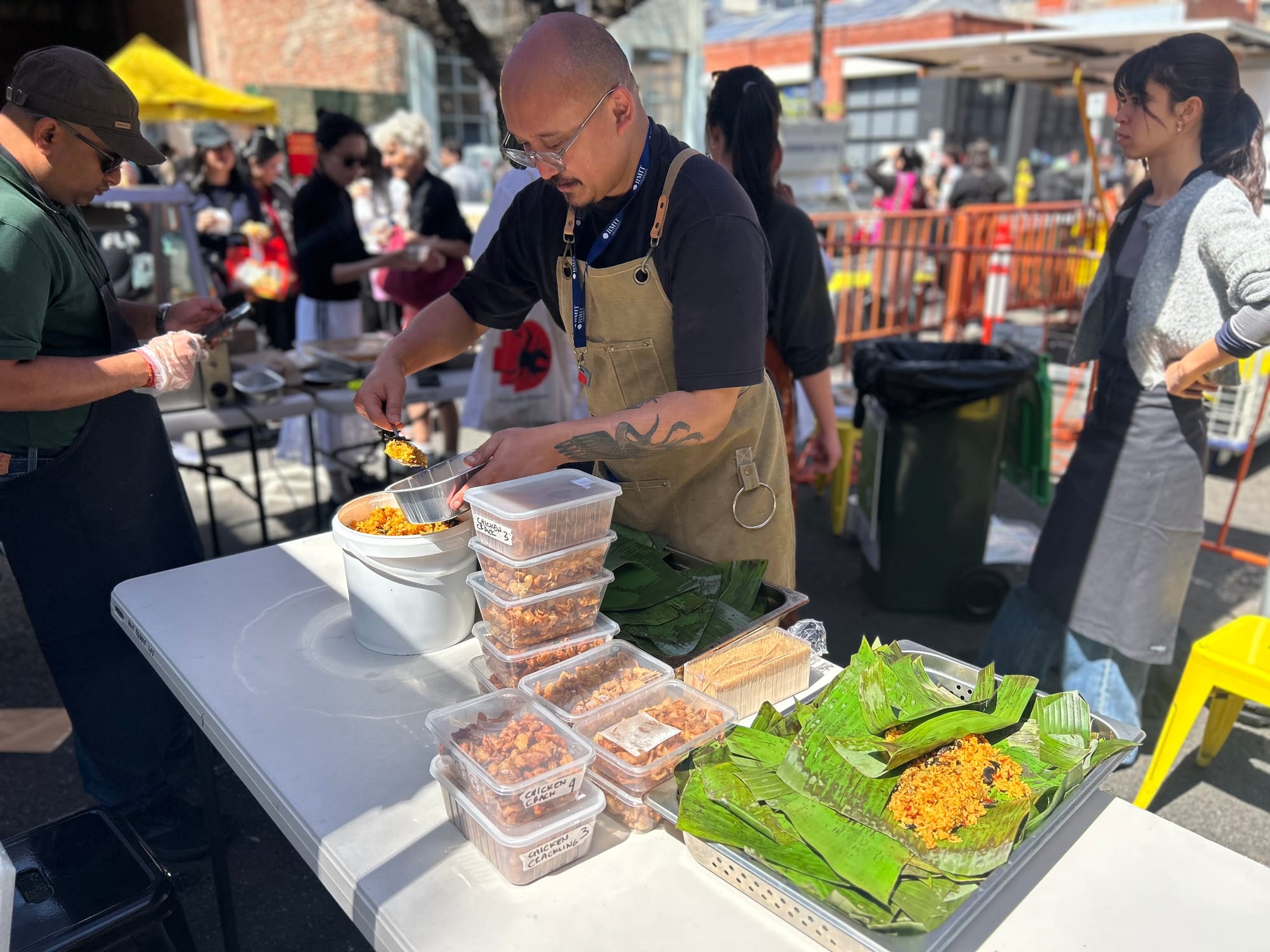
City North Shared Futures Festival
Signage that reads ‘FREE FRESH FOOD ‘COZ FOOD SHOULD BE FREE’ invites attendees to take home fresh produce at no cost, reinforcing the event's core belief that food is a right, not a privilege.
This celebration of free food and community connection is made possible by a partnership with the City of Melbourne, as well as dedicated collaborators like Long Prawn and Just Food Collective, organisations that value increasing food access.
The festival’s main feature is free food booths that use “undervalued ingredients and community resources”, a deliberate challenge to conventional food systems and charity models.
The approach differs from the Maltese feast in execution. It’s experimental rather than traditional and temporary rather than annual. But the underlying question remains the same.
What happens when food is treated as a right, not as transactional?
For Dr Kleve, the answer lies in how these programs shift the power dynamic. “When food programs are designed with dignity at the centre, they stop being about charity and start being about community,” she explains.
Both the Maltese feast and City North Festival demonstrate this principle in practice. One through decades of cultural tradition, the other through an experimental approach.
Yet, sustainability and maintaining momentum remains a challenge. These types of community events are only made possible due to the kind and passionate individuals behind them who are willing to sacrifice their time and resources.
The Maltese feast relies entirely on volunteer labour from women now in their seventies, eighties, and nineties. “For us older people, it's important that we keep that tradition going,” Newland says. “We're now trying to pass it on to our sons and daughters.”
While these events offer a great solution to minimising loneliness and building connections in Melbourne, it’s uncertain whether younger generations will maintain such connections. Without any consistent funding or institutional planning, initiatives like the Maltese Feast depend entirely on the passion and capacity of generous community members.
The City North Festival faces similar challenges. Its temporary nature raises questions about whether one-off events can address chronic issues of isolation and food insecurity, particularly when relying entirely on volunteers and inconsistent funding.
Addressing the root causes of food insecurity remains the biggest challenge.
“Food relief is important, but it's not the solution to solving and lifting people out of the experience of food insecurity,” says Dr Kleve. “To really do that, we need to be addressing the core drivers or determinants for why people are facing this experience.”
Until those systemic changes happen, however, what the Maltese feast and City North Festival ultimately demonstrate is that addressing food insecurity and loneliness isn't just about distributing meals or hosting events. It's about creating spaces where people feel they belong, where contribution is valued regardless of capacity to pay, and where the simple act of eating together becomes an act of resistance against isolation.
In a city grappling with food insecurity and loneliness, these shared tables prove something powerful. That connection is still possible. Whether through generational traditions or bold new experiments, Melbourne's communities are demonstrating that when we eat together, we don't just nourish bodies; we foster connection.
If you feel disconnected or want to make a difference, find a local community food event near you. Volunteer your time, donate your resources, or simply show up and share a meal.
The solution to a disconnected city starts with a shared plate.