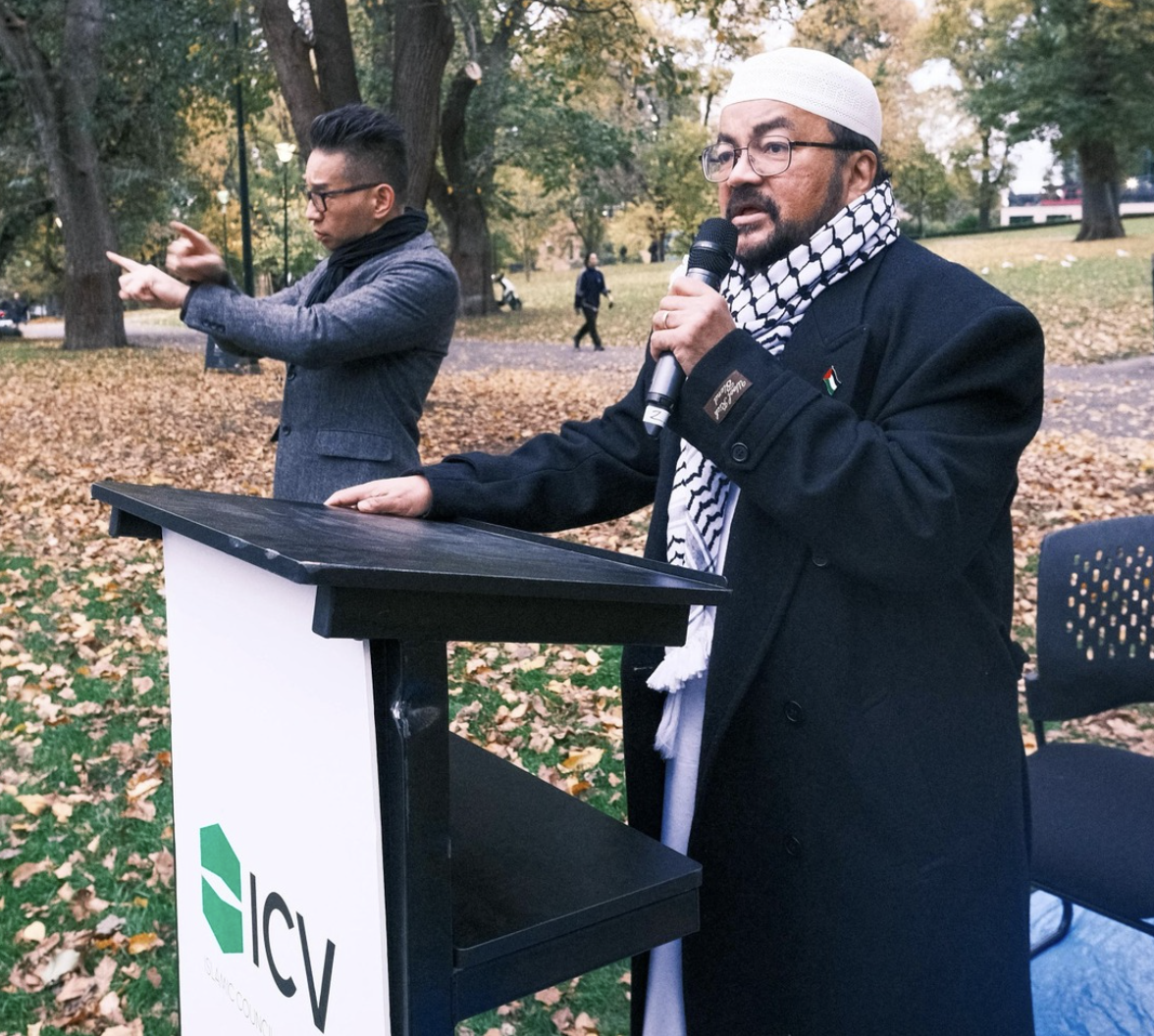
It’s March 17th 2019, and president of the Islamic council of Victoria (ICV) Mohamed Mohideen is sitting in his office preparing to oversee an open mosque day.
Just two days prior the Christchurch massacre had taken place when an Australian born citizen opened fire upon two mosques, killing 51 muslims as they were in their place of worship.
This is one of the most abhorrent attacks ever felt by the islamic community, and sent shockwaves across the world, reminding us all of the racism and bigotry that is still prevalent today.
Mohideen knows this more than most, as the president of the ICV he sees the effect this has upon the muslim community, with many looking to the “peak muslim body in the state of Victoria” for answers as to how they should respond.
Many felt the advice would be to stay inside, to shelter away and grieve this horror in the silence and safety of their own home.
However Mohideen felt that mosques needed to be open to the public more now than ever, “we are not going to live in fear” he tells me, “we will not be the victims”.
He speaks of the importance of opening these mosques, and what it does for the Muslim communities when they do so.
This ability to lead a normal life is one that has become more and more difficult for muslim communities in recent years.
This comes as there are reports that tout a rise in anti-muslim opinions within Australian communities, and a rise of anti-muslim attacks in communities.

This rise has been felt very strongly in the Muslim community, with Islamophobia being the major issue that they face at the moment.
It is understood that there is no blanket solution to the issue of Islamophobia, and that it will be a constant battle for the community.
However that does not stop the ICV and others from attempting to make change.
The ICV conducts several efforts to combat anti-muslim racism, such as trying to move away from the words islamophobia.
As Mohideen states “it really doesn't reflect what the problem is” and minimises the real harm that is felt by anti-muslim hate.
They also conducted sessions “with government, with councils” and workshops “with muslim communities” in order to educate others about anti muslim hate.
There are also other initiatives such as the special envoy to combat islamophobia which offers recommendations to federal and state governments to introduce in order to fight anti muslim hate.
These recommendations are yet to be adopted by the Victorian government and there are many debates and discussions to come about how these recommendations can interact with legislation and impact law.
Anasina Gray-Barberio is the Greens member for northern metro for the upper house, and is the spokesperson for multiculturalism and anti-racism.
I spoke to her in order to find out what is being done in Victorias parliament to combat anti-muslim racism and to bolster social cohesion.
She believes that a multitude of things need to happen in order to combat these current issues.
One of which is addressing what she calls “right wing extremism" and the pressure they put on vulnerable communities.
These anti-vilification laws are designed to dissuade people from inciting or threatening violence across minority groups such as muslims, but as well as many others.
These laws are also designed as a broader attempt from the state government in order to address the perceived issues in social cohesion in Victoria.
Anasina and the greens also believed that in order for progress to be made there needs to be a greater societal attitude change towards discussions of inter faith violence.
She believes that there is a false equivalency as people believe “if you’re for one group then you must be against another group”.
It’s believed that this is an attempt to stop a good faith dialogue about interfaith violence and inhibits the ability of parliament to legislate on the issue.
Gray-Barberio also believes that this is deliberate from some members of parliament as when issues of islamophobia are brought up some parliamentarians are made uncomfortable.
This is because, as Anasina puts it, “it spotlights things that ministers aren't doing, things that they should be doing” thus their dislike for the questions about islamophobia.
Finally is the issue of representation, as Anasina believes that if there is representation of minority members in parliament then there would be greater attention brought to issues minorities face.
As of right now the victorian parliament only has one muslim member thus limiting the amount of representation of muslims compared to the number of muslim members of the Victorian community.
However there is progress being made, as Victoria's current parliament is the most diverse state government that has been seen.
There is also hope for progress in respects to the anit-muslim racism that has been prevalent in the community.
It was agreed upon by both Mohideen and Gray-Barberio that the Palestine and Israel conflict has stoked the flames of racism and xenophobia.
But with the recent peace talks and, however fragile, ceasefire it is hoped that tensions may reduce and social cohesion may benefit.
It would be remiss to say that this temporary peace in the middle east will bring calm to racial and religious attacks in Victoria, but with work from the muslim community and Government it may be able to finally be addressed.