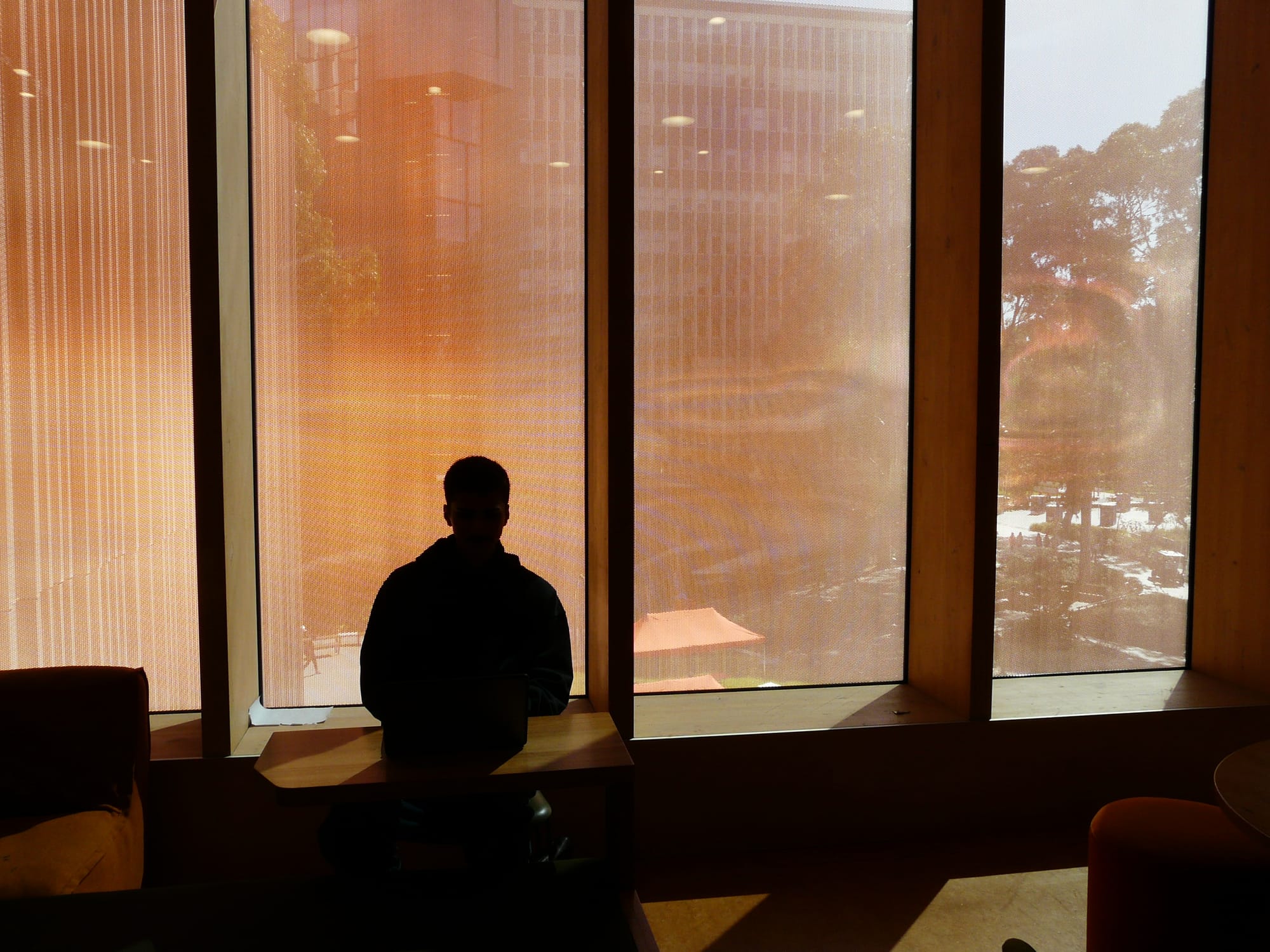
Max Ecuyer
Inside a university classroom, opportunity and support can appear equal between students. Within the confines of that room, each pupil's hand can grasp the same resources.
But disparities between students are often determined by factors outside of the classroom. An unbalanced experience can exist between two students sitting next to each other, created by the different obligations they must meet in their personal lives.
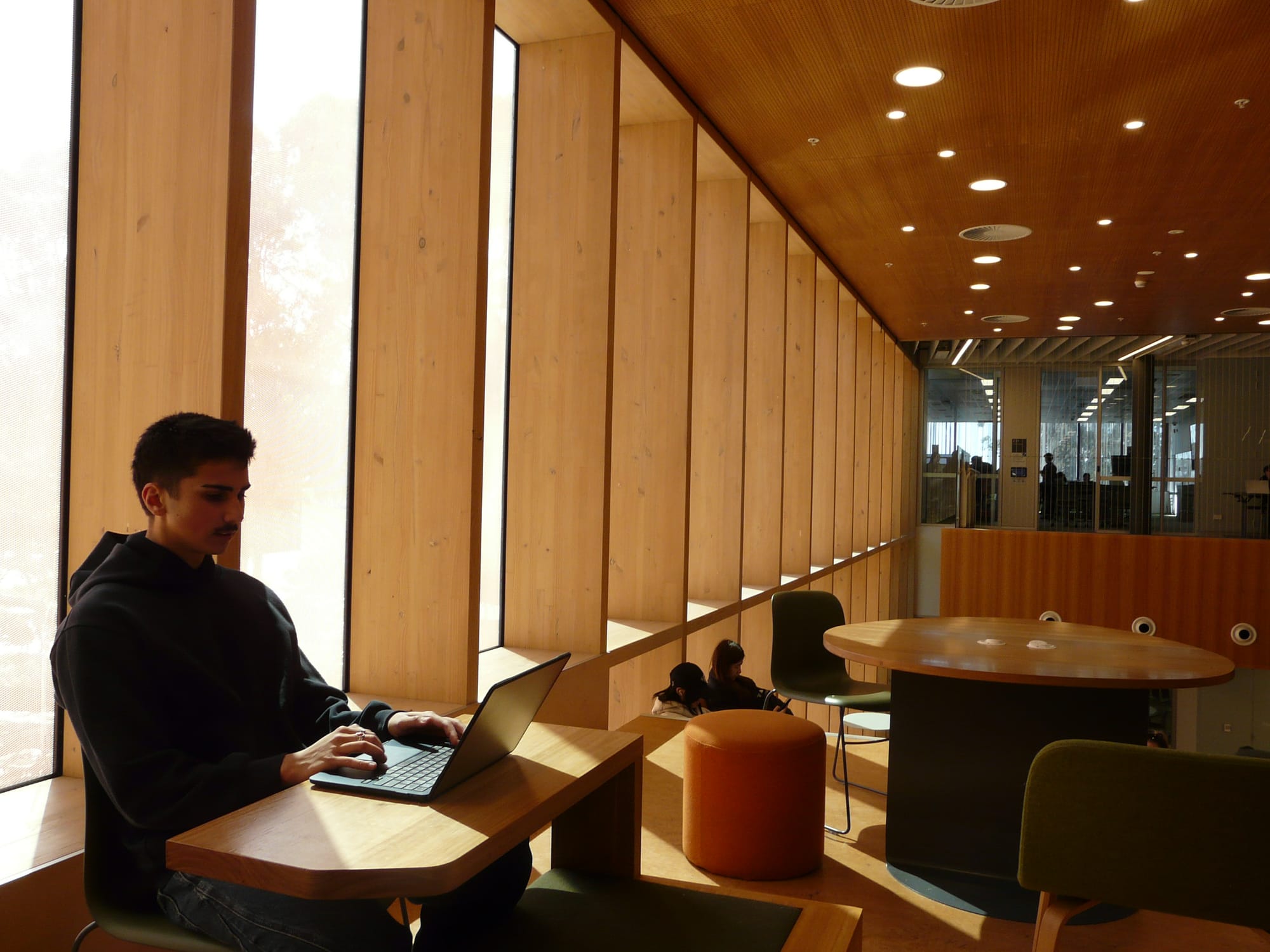
Sachin Srikanth and Sebastian Romanin are Australian university students in their second year of study. They attended the same high school and grew up in the same area. They both have busy schedules, balancing classes, study, social outings and family commitments.
Mr Srikanth works a casual hospitality job, whereas Mr Romanin works full-time at a furniture company and casually as a receptionist.
It is common for students in Australia to work while studying. A 2024 Department of Education report found that 80% of Australian university students worked while completing their degree.
While Mr Srikanth and Mr Romanin have the shared responsibility of juggling study and employment, their weeks contrast. It is more than different jobs that separate them. The varied presence of one thing drives the gap between them.
Choice.
Mr Srikanth is completing a double degree at Monash University Clayton Campus while working casually at a cafe. He attends classes on Tuesday and Wednesday and typically works Friday Saturday and Sunday.
Despite this busy schedule, his average week during the university semester is ripe with choice.

While his classes are set, he can shift his week around depending on current challenges and priorities.
"I can choose what days I work based on my uni schedule, and it's pretty easy to cancel work last minute if things get too hectic," he said.
This week-to-week flexibility gives Mr Srikanth the ability to focus on his studies and assessments while always allowing time to socialise.
"I try to have a good work relationship, but right now I'm putting most of my time into study," he said.
"I've taken off dates of work around assessments and exams to make it a bit easier."
Mr Srikanth said that his wealth of choices is a direct result of his privilege of being able to live at home with his parents— a reality that is becoming more common for students as rent increases.

The Australian Institute of Housing and Welfare found that between 2008 and 2018, the proportion of young people living with their parents increased from 48% to 58%.
"I have no pressure on renting or strong financial burdens, my biggest worry can be study rather than financial issues, I'm pretty lucky in that sense."
Mr Srikanth said work flexibility and minimal financial stress are contributing factors to how connected he has felt during his two years at university. He said that being able to attend classes as well as events on his days off led him to develop friendships.
A 2024 survey published in Taylor and Francis Online found that students who could frequently attend classes in person and spend time socialising at their university had stronger connections to their colleagues and campus.
"The social aspect is my favourite part, seeing friends makes the day go by faster," Mr Srikanth said.
"I wouldn't come to uni as much if I didn't have that leisure time to spend with friends."
Mr Srikanth said that even with his flexibility he still struggles, and the thought of working full-time and studying seems impossible to him.
This undesirable thought for Mr Srikanth is the stark reality for thousands of Australian students, such as Sebastian Romanin.
Mr Romanin left Melbourne after school and moved to Queensland to study business with a major in economics. He lives on his own, working full-time as a manager and casually as a receptionist to cover rent, utilities, groceries and interstate travel to visit his family.
Being in a different state, he was happy to capture his week with photos he sent in.

For Mr Romanin, choice is forfeited to meet the obligations of his degree and employment, and deviating from this would mean potentially failing his course and being fired.
"It's not really feasible, all my free time is spent doing uni and then the rest is populated with work," he said.
He attends university on his days off, working weekends to make this possible.
"The full-time gig is a total necessity because it covers rent and groceries, and the second job helps ease other financial stresses."
Mr Romanin averages 40-50 hours of work per week, and he recognises the effect this has on his ability to study.
"You take the shortcuts that you need to take to get the outcome, and this is reflected in grades," he said.
An NCVER report into the outcomes of combining work and study found that when a student works more than 24 hours a week, they are less likely to complete their degree.

To stay ahead, Mr Romanin has to work on his assignments during downtime at both his jobs.

"It's a very unnatural thing and not a normal situation, they expect everyone to be working, just not to the extent that I am," he said.
While the exact number of Australian university students who work full-time is not available, they are certainly in the minority. This is reflected in the research, and most data from the Australian Bureau of Statistics focuses on students who work casually or part-time.
Mr Romanin said his unique situation has impacted how connected he feels with his university.
"My life would be more relaxing if i wasn't working full time, most people can socialise for half the day at university."
Despite his busy weeks, Mr Romanin said that feeling connected ultimately comes down to the individual and their approach to university.
"There are plenty of people who don't work full-time and go through their uni degree struggling to make connections," he said.
"There are heaps of reasons why someone might have a hard time."
So what support is available for students who are working full-time?
For Mr Romanin, he receives phone calls from his university to check in on how he is doing. He said he really appreciates this support network, but wants to see broader structural changes.
"There needs to be a way to change mandatory attendance but I'm not sure what this would look like," he said.
"Lenience on attendance for things like quizzes would help, but I understand why there isn't because the majority of people are only working 10-15 hours a week."
Attendance policies vary between degrees and universities across the country.
For example, attendance is not enforced at RMIT University in Melbourne, but it can be mandatory for certain classes within the semester. More universities across the country are adopting this framework, granting more leniency with lecture and tutorial attendance.
Over the last few years, RMIT lecturer and tutor Kate Arnott has observed certain changes. She said that teachers are now generally more willing to grant extensions because they recognise that some students are truly struggling.
“A lot of students are finding it tougher, it is a luxury now to be able to study full-time and not work,” she said.
She said that some students who are clearly committed to their studies are now falling behind because they must work long hours.
“There are students who once would have been much more committed to their study but are finding it hard to strike that work life study balance.”
Ms Arnott said the university system is far from perfect, but structural changes take time.
“The uni structure is problematic, we do have to look at ways to change the timetable to cater towards students who are in full-time work positions."
Ms Arnott said teachers can make a difference in the lives of students.
“It’s important for lecturers and tutors to take everyone’s individual circumstances into account as well they can, to support their working hours and what their job requires.”
While teachers like Kate Arnott need to understand the specific needs of their students, the responsibility of changing the university structure cannot be placed solely on their shoulders.
“There is no quick fix or easy solution,” she said.
Here lies the challenge. Degrees are designed to suit the needs of the majority. According to the Australian government, 1.3 million people were enrolled in university in 2024. With numbers of this scale, there is no one framework that will please every student.
For people like Sachin Srikanth, the current university system is great. With choice in his personal life, he is able to seamlessly fit into a structure that is designed for his needs.
But as the cost of attending university increases, more people's lives will begin to look like Sebastian Romanin's, and the university system needs to catch up to the needs of these students.