Link to ArcGIS Story: https://arcg.is/0TiWjj3
Australia's aged care population is diversifying, therefore the services they receive must diversify alongside them.
Victoria's aged care system is under significant strain, with an aging population and an under-sourced workforce, elderly Australian immigrants are being faced with a unique set of challenges.
Immigrants are steadily becoming a larger fraction of Australia's population, this is reflected in aged care nationwide, with 1 in 3 Australians using aged care services being born outside Australia.
How does aged care work in Australia?
The aged care sector in Australia is notoriously confusing, the wall of bureaucracy that stands between older Australians and getting the care they need can make the process quite intimidating even for someone who speaks English as a first language.
If you don't speak English fluently, it is yet another hurdle to attaining the care you need.
Aged care services are broken up into a range of different specialised services, like respite care, transitional care, Aboriginal and Torres Strait Islander care, and innovative care.
However, the overwhelming majority of residents are split up into residential care, which housed 49,161 residents by June of 2024, and home-care, which consisted of 70,808 residents by June of 2024.
Since 2018, the gap between home-care users who are Australian born and those who are from non-english speaking countries has been steadily decreasing...
In 2024 it had almost reached a fifty-fifty split...
Despite being a substantial demographic within aged care, not enough is being done to mitigate the impacts on immigrants' social and mental wellbeing which arise from being separated from one's family and culture.
Studies show that the key indicators that improve the wellbeing of older people - immigrant or not - are areas such as health, social life, and independence. While these are areas that can be a struggle for all people entering aged care, it is a hurdle within itself for a person to improve these areas within a system that isn't designed to cater for key cultural differences.
I spoke with Dr Sunil Bhar, a Professor of Psychology at Swinburne University, who has extensive experience in the field of Aged Care.
Along with researchers from Swinburne and other universities across the country he’s conducted various studies into the systemic issues facing immigrants in aged care, and what our institutions can do to improve their wellbeing.
Are there major flaws in Australia's aged care sector that are causing high rates of loneliness and social isolation for elderly immigrants?
One of the studies that Dr Bhar was a part of explored the influence of care networks on happiness within older immigrants.
One of the findings of this study was that a greater level of happiness was recorded when people were able to not only receive care, but also be a provider of care to others...
Do you believe reciprocal care networks are an innovation that need to be introduced into residential aged care?
After my discussion with Dr Bhar, I wanted to gain access to the people working within the aged care sector, who are doing essential work in providing these culturally appropriate and sensitive services.
I was lucky enough to speak with Rebecca Power, the CEO of Spectrum Migrant Resource Centre, an organisation that provides personalised, culturally appropriate aged care services to over 4,400 elderly immigrants in metropolitan Melbourne
Rebecca explained some questions that I had about...
...the importance of Spectrums approach to providing cultural networks...
...how cultural care is about more than just language...
...what are some of the most common issues for immigrants in aged care....
...and are aged care standards and government policies sufficiently supporting culturally sensitive care?
The Aged Care Act 2024
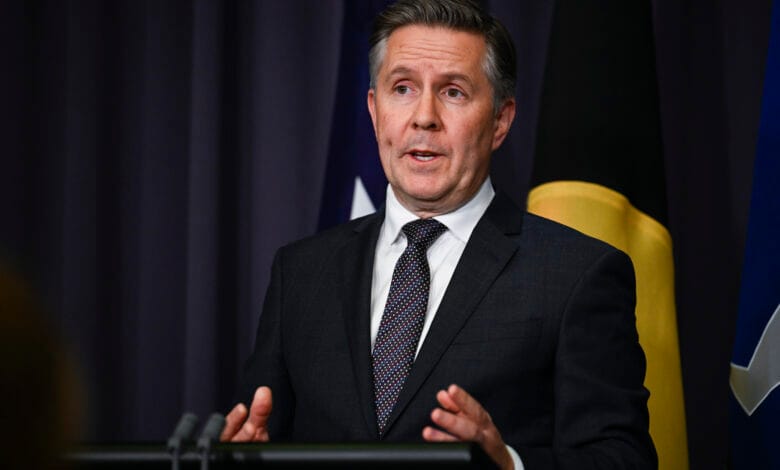
The act that Rebecca is referring to, is the Aged Care Act 2024, and along with the Support at home program, it is one of the new reforms to aged care that will be put into action on the 1st of November this year.
It is the Labour governments first bill specifically affecting the lives of seniors since the Royal Commission Response Bill in 2022, which sought to address the findings of the Royal Commission.
The findings included systemic issues such as patient neglect, inefficient spending, and excessive wait times for home-care packages.
According to the government, this Act will provide a new rights-based framework and a reforms to how aged care services are priced.
We know that the 1st of November will bring many changes for senior Australians.
What we can hope for from these new reforms is that senior Australians from all backgrounds are given fair, equitable treatment and that the government has developed a more nuanced understanding of what it means to provide culturally safe care.