A Crisis Australia Can't Ignore

Why Young Australians Are Breaking Under Today’s Pressures
Young Australians are currently facing an epidemic of a rising risk of mental health-related issues. 16-24 year olds are the most at risk in Australia, with anxiety, depression, and self-harm the most prevalent and have been on the rise since the pandemic in 2020.
“I just thought it was a me issue” Tex, a 22 year old student.
For Tex, reaching out for help felt like a sign of failure and weakness than a step towards recovery.
Tex’s personal experience isn’t uncommon, according to Headspace, one in four young Australians has struggled to access the necessary mental health support in their lives.
The Monash University Youth Barometer Report from 2024 displayed data that suggested one in five young Australians rate their mental health as poor or very poor.
The alarming statistic displayed was that only 21% of those people with poor mental health received support, a vast majority didn’t attempt to reach out, and this can be attributed to several significant barriers with high costs, variability in the services and the stigma surrounding mental health, especially with young males preventing young adults from taking that next step.
To understand the increasing vulnerability of the younger generation, I spoke with Dr James Collet, a senior lecturer at RMIT in Psychology and who holds a PHD in the field, with over 20 years of experience he was able to give his insight into the worrying risk that young Australians are facing.
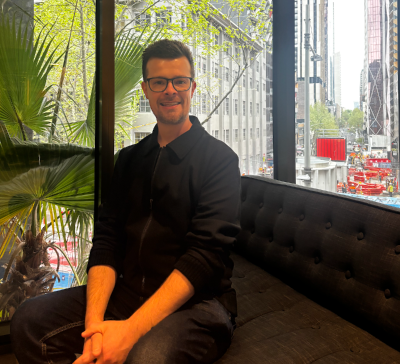
Dr Collet spoke about the male experience with mental health, with the large stigma around men speaking out and expectations to hold in issues and handle them by themselves.
Dr Collet describes the “inflexible pattern where it's, I am a male, this is expected of me, therefore I will just hold everything in, and that just doesn't work, and so we need to be doing more to encourage men to really speak up about this stuff and to seek help where it's needed.”
Tex knew “Half the pressure was the inner thought: ‘I’m a guy, I should figure this out on my own.’”. A scarily common battle that young men face, but through Tex’s experience the only way to break down these barriers is to keep talking and telling your story.
“There’s a lot of pressure to get help, but not enough support saying it’s okay to need someone.” Tex.
Despite Dr Collet warnings that “We don’t have enough psychologists. Waitlists are huge. COVID demand never subsided, it increased,”. Tex was fortunate to have access to a private therapist, an approach that thousands of young Australia's don't have access to. With an average cost of a therapy session ranging between between $100 and $250, with living pressures more apparent than ever for most booking a session is way to far out of reach for young adults.

The current social pressures being placed on young people through the current cost-of-living now delaying any independence, financial security and future planning all crucial for identity development and forming your own experience.
Social media is another aspect that can be a relentless noise as “young people are trying to find who they are amid all the noise — and the noise keeps getting louder.” Dr Collett.
It has made comparison constant, validation addictive and identity has become performative across the many social media platforms.
“We live in a world that’s increasingly disconnected. Online connections don’t necessarily replace person-to-person contact. And it’s much harder now for young people to find a sense of meaning or identity.” Dr Collet emphasised the importance of real-world connections.
The new age of psychology has never been so active and evolving constantly, Dr Collet “When I started studying psychology, it was mysticism. No one knew what was going on in it”. Now, the education for young people in the field of psychology is greater than ever, with schools implementing programs
The Victorian Government has invested $217.8 million over four years in the Schools Mental Health Menu. This program aims to promote student well-being, enable schools to implement early intervention to support students, and provide detailed management for students with issues.
By setting students up with the right systems and knowledge in place before facing adulthood, Australia is heading in the right direction to lower a young person’s risk of developing mental health issues.
Dr Collet understands the importance of “Early intervention isn’t just support, it’s prevention of lifelong struggle.”
Young Australians are struggling more than any generation before them, but not because of any flaw or weakness.
Navigating lives that are being shaped by economic instability, relentless comparison and cultural expectations that are no longer up to date with reality. Yet, the stigma still continues to convince that their battles are a result of personal failures.
With early intervention being so paramount through programs like the Schools Mental Health Menu and a growing awareness lead by experts like Dr Collet and people that are able to speak up like Tex about their struggles, the path forward becomes clearer than ever.
The next step for young Australians is ensuring that everyone feels they are able to take it.
Support services for those who have been struggling.
Lifeline — 13 11 14 — 24/7 crisis support
Kids Helpline — 1800 55 1800 — for Australians under 25
Beyond Blue — 1300 22 4636 — anxiety, depression & mental health support
Sources
Dr James Collet, Royal Melbourne Institute of Technology
Tex Freeman, Melbourne University Student.
Headspace National Youth Mental Health Survey — “Youth mental health statistics” page: https://headspace.org.au/our-impact/evaluation-research-reports/youth-mental-health-statistics/
Monash University – “The 2024 Australian Youth Barometer: Understanding Young People in Australia Today”: https://www.monash.edu/education/cypep/research/the-2024-australian-youth-barometer-understanding-young-people-in-australia-today