Is federal budget coverage missing the bigger picture?
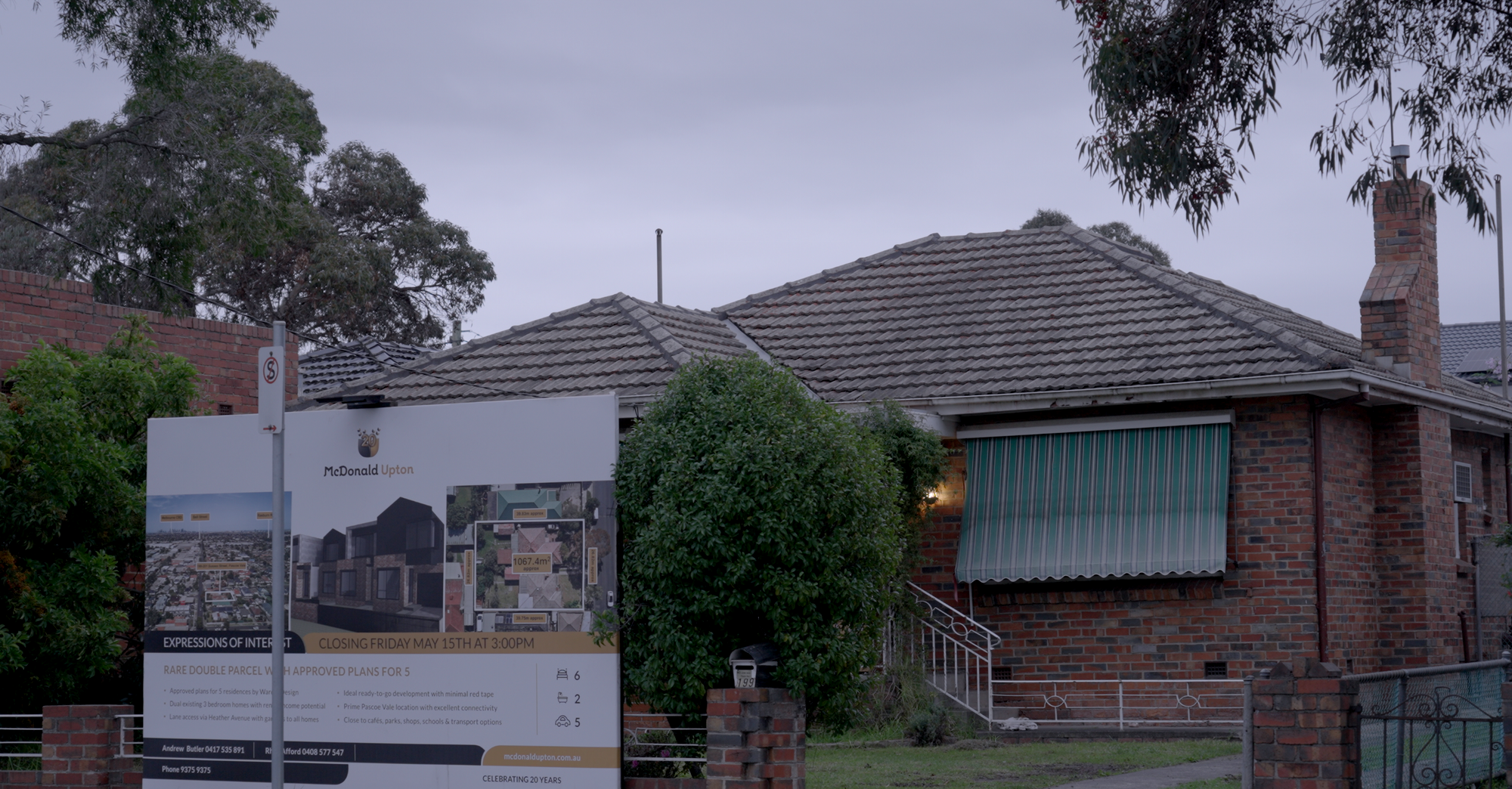
The Labor Government's Federal Budget has sparked a heated debate over its proposed tax reforms to the capital gains tax, negative gearing and other tax concessions.
It has been met with an influx of heavy pushback ranging from hyperbolic headlines to viral meme campaigns.
As the flurry of coverage on Labor's proposed reforms flooded both social media feeds and newsstands alike, attention has been drawn to how the media reports on significant Government policy making like the federal budget.

Front pages like these are scattered amongst the usual display of budget reporting, with a large amount of the more provocative headlines belonging to News Corp outlets.
Some have related the Murdoch papers spin on the Budget to its ties to real estate company REA.
It has been reported that News Corp’s controlling share of REA group makes about 65% of the media company’s market value, with a worth close to $13.75 billion.
Though even the more traditional approaches to federal budget reporting have also attracted scrutiny.
A common style of budget reporting is the ‘winners and losers’ angle.
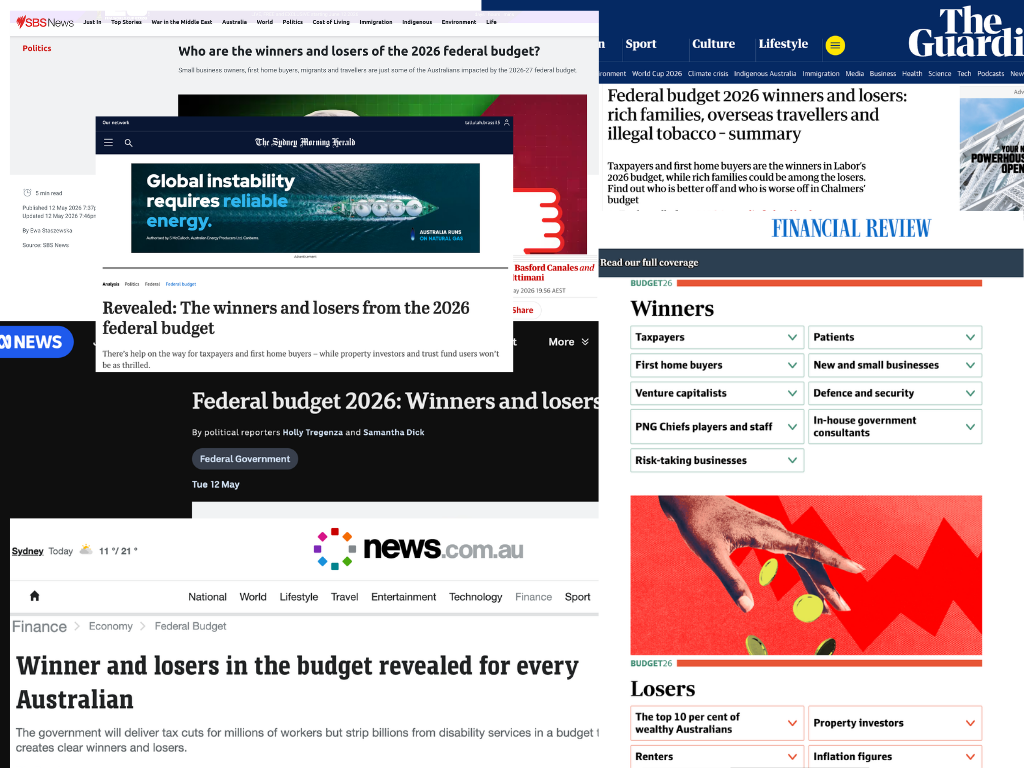
Strategic Communicator Lauren Beckman argues the ‘winners and losers’ style of coverage frames the budget through an individualistic lens
Her commentary also drew attention to the important policies that have gotten lost in the cluster of competing headlines.
Included in the Budget is a $182.6 million investment aimed to tackle the weaponisation of the Child Support Scheme, and it's a policy she says deserves more than a footnote.
The investment is a part of the Government's commitment to closing loopholes in Commonwealth systems that enable financial abuse and coercion.
Another significant policy that has drawn praise from those in its field while receiving minimal attention, is the Budget’s National Youth Housing Supplement.
This $60 million investment into providing social housing for young Australians follows years of advocacy to fix a problem in our housing system known as the Youth Housing Penalty.
It was coined by the Home Time Youth Housing Coalition who, alongside the University of New South Wales, discovered the systemic barriers that discouraged providers of community housing from offering tenancies to young people experiencing homelessness.
Despite the praise advocates have given the National Youth Housing Supplement, it alongside the Budget’s other investments into homelessness and housing supply have largely been disregarded in the coverage of the budget's housing reforms.

The debate on Labor's proposed changes to the capital gains tax and negative gearing, as well as the broader suite of tax concessions, has largely been framed as an older versus younger generation conflict.
Beyond the headlines, the issue of Australia's housing crisis remains, as do those who are affected by it.

For young renters like Zofi Halyday the proposed reforms are a welcome relief, that as she described, have given her some semblance of hope that home ownership may now be a possibility in her future.
“As a young adult and a renter, I figured that I would be a renter for my whole life. I've had very low expectations for good reason,” she said.
“Both policy and the market have been in favour of investors for far too long, and it's left people like me with no chance.
“When you're renting you have no security, you don't know what your future looks like and that can be very scary because everyone's worst fear is ending up on the street.”
Watch the full interview with Zofi here