Effect of Victorian Public School Funding Gap
Victoria, self-described as “the education state”, is providing its public schools with the lowest amount of government funding in the nation.
The funding disparities that affect Victorian public schools create challenges for both staff and students.
Despite the public school sector making up the largest portion of schools in the state, the average funding per student is below the national average.
According to the Australian Curriculum, Assessment and Reporting Authority (ACARA) school income report, public schools in Victoria received $16,964 per student from government funding, while the national average was $18,669 per student.
Not only is there a funding gap between Victorian public schools and those in other states, there is also a funding gap between Victorian public and private schools.
According to the same data, private schools received less funding per student than public schools. But due to the other income sources of student fees and donations, Catholic schools on average received $21,462 per student, and independent schools on average received $29,418 per student.
According to the Australian Education Union report ‘a decade of inequity’, public schools in Victoria educate about two point two times the number of students from low socio-educational advantage background compared to private schools.
The union also estimates in this report that Victorian private schools will be overfunded by the government by $365 million from 2024-2028, while public schools will be underfunded by $7.9 billion in the same timeframe under current arrangements.
Public schools are facing many challenges due to unequal funding. This particularly affects students with disadvantaged backgrounds.
Dr Bonita Cabiles, a lecturer at RMIT’s school of education, explains that although government schools educate the majority of students from disadvantaged backgrounds, funding causes challenges to meet their specific needs.
“When you think about students who don’t have the social, cultural, or economic capital that wealthier students have, funding becomes critical in providing equitable educational experiences,” she said.
Dr Cabiles states that public schools have a large number of students from disadvantaged backgrounds attending, but their learning needs are not necessarily met due to difficulties with funding.
She described an event she witnessed during a placement at a public school a few years ago.
She saw a support worker, who had been assigned to one student in a classroom, but had to work with 2 other students in the same room to support their learning in addition to the assigned student.
In theory, students who need a support worker should ideally have a 1:1 support worker-to-student ratio, but due to the lack of funding for students, this is often not the case.
Dr Cabiles highlighted the potential long-term impact of funding disparities on students, noting that equitable access to resources can better support students’ aspirations and their belief in their ability to achieve them.
“They're able to dream of better lives for themselves,” as well as having better support to achieve these goals, she says.
Cabiles supports the idea that funding should be allocated on a more needs-based scale to better ensure that public schools reach the Schooling Resource Standard (SRS) to adequately support both students and teachers.
Teachers working in Victorian Government schools say that the differences in funding can mean that students at schools in lower socio-economic areas do not have equal access to resources and opportunities.
A teacher who previously worked at a school in a lower socio-economic community describes a key difference in funding between public and private schools.
“Schools in lower socio-economic areas need to make more choices about where they put their money,” the teacher said.
Public schools, as they have more limited funding, need to make tough decisions about where their money can go, what they can invest in.
Some areas where funding is wanted or needed sometimes need to be put aside or cut out entirely, while other things have a higher priority for funding.
“Whereas private schools can basically do what they want because they’ve got the funding,” the teacher explained.
This teacher discusses that this lack of equality in facilities, resources, equipment and opportunities creates stereotypes in our communities.
Such as the stereotype that private schools are “better” than public schools, which she says is absolutely not true.
The fact that private schools are better funded does not speak to the quality of teaching, but just that they have more access to better resources and opportunities, she explains.
A second teacher, who teaches at a school in a lower socio-economic community in a creative subject area echoes these concerns.
He expressed that when you work at a school with limited funding, advocating for more equipment in your subject area “can be frustrating,” given that at different schools, certain subjects are prioritised over others.
Being a teacher without the equipment you need to support your teaching is also quite frustrating.
He said, “It’s like being a chef without knives”, but you need to do your best with what is available to you, he explained.
He further discussed students having access to equipment to use in their creative projects for class assignments.
He expressed concerns around students not being able to fully realise their ideas in their projects “The equipment is there to support ideas; if students have ideas that they can’t realise as they don’t have the equipment, then that’s a problem”.
This teacher attests to the fact that his students have come out with some great projects using what little equipment they have access to, but he wishes that the school could provide further opportunities for his students, particularly with equipment.
This teacher stated that government schools need to do their best to create opportunities for their students that would not otherwise be available to them from their own backgrounds.
He expressed that it is the school's responsibility to “open them up to things that would go beyond their personal backgrounds and experiences”.
Both teachers agree that schools should be funded differently, in the hopes of better supporting students from government schools, especially those from lower socio-economic backgrounds, to have access to the same opportunities as those who can afford private schooling.
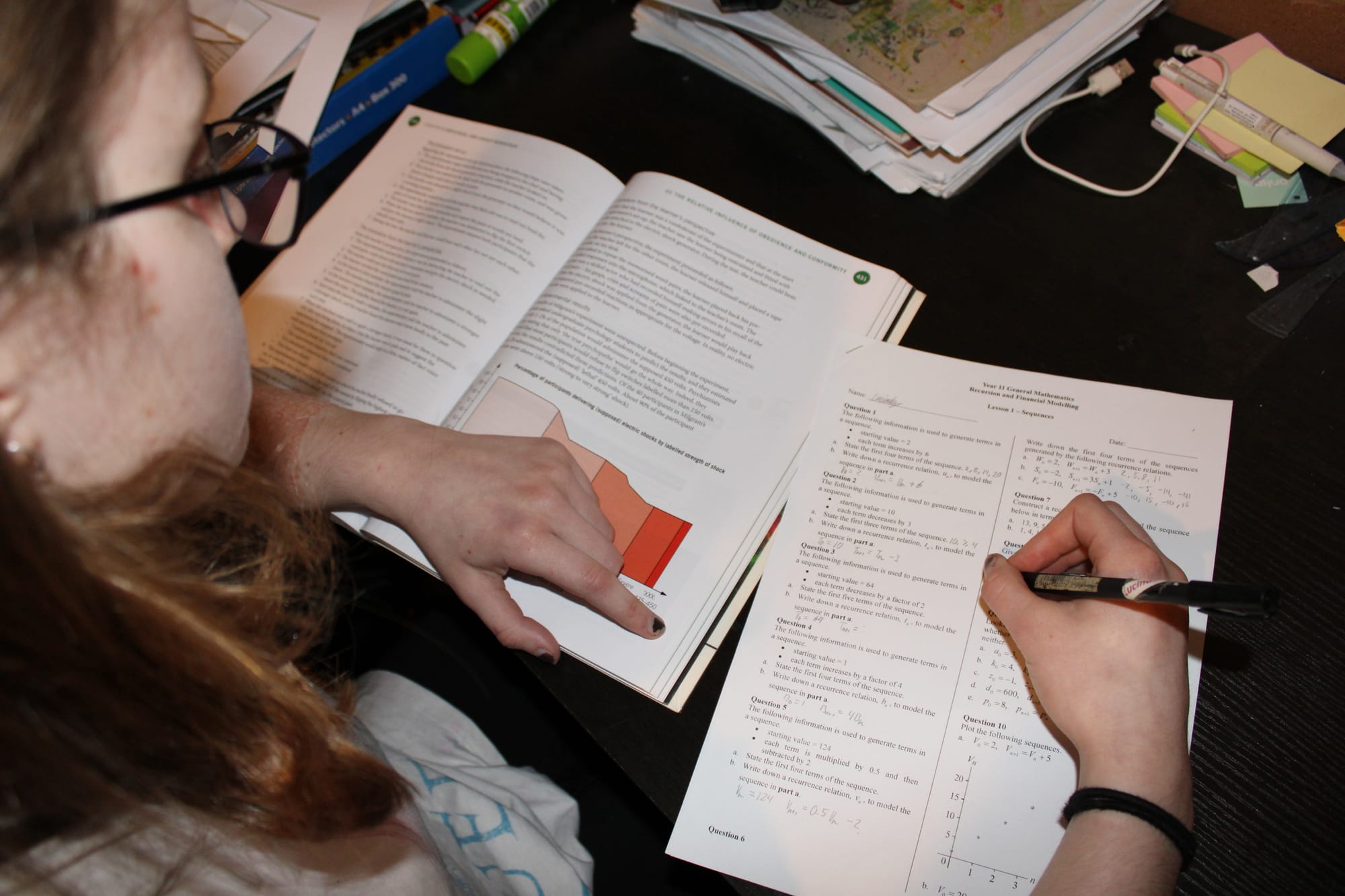
Lucinda Prelec, a year 11 student who studies at a government school in West Melbourne, says she notices how limited funding affects her classmates, teachers and her own learning.
Lucinda has studied at her school since year seven. She has noticed in many different ways how limited funding has affected her secondary school experience.
Lucinda notes this especially in comparison to her knowledge of what private school students get to experience.
Lucinda described how “the lack of sufficient funding at my school has affected my education by limiting the opportunities that I have been able to interact with”.
She explained that she feels as if she could be better exposed to different opportunities to support her education, such as more access to media equipment and different education-related excursions that private school students often have access to.
She noted that although next year some of her subjects have been better funded to create more opportunities for her final year, it seems that funding from other subjects had to be cut to accommodate this, she predicted.
She notes how her teachers have been affected by limited funding, stating that she has seen her teachers “attempt to get more funding so they have what they need to run the subject better”.
Lucinda admitted that at times, she feels jealous of what private school students get access to, “Private schools often get to go on fancy excursions and have specialised subjects and opportunities—ones that I don't even get the chance to consider”, she explained, “even fireworks at their graduation, not that that has anything to do with education”.
Lucinda feels confident in her future and believes her school greatly supports her in achieving her grades and aspirations for university. She hopes that in the future, students studying at her school will eventually be better funded and have better access to opportunities than current students.
Despite this, she expressed gratitude to her school and teachers as she knows they do the best they can with what they have.
“My teachers have persevered and gone above and beyond to ensure that my peers and I are well-educated and capable of achieving our goals.”